
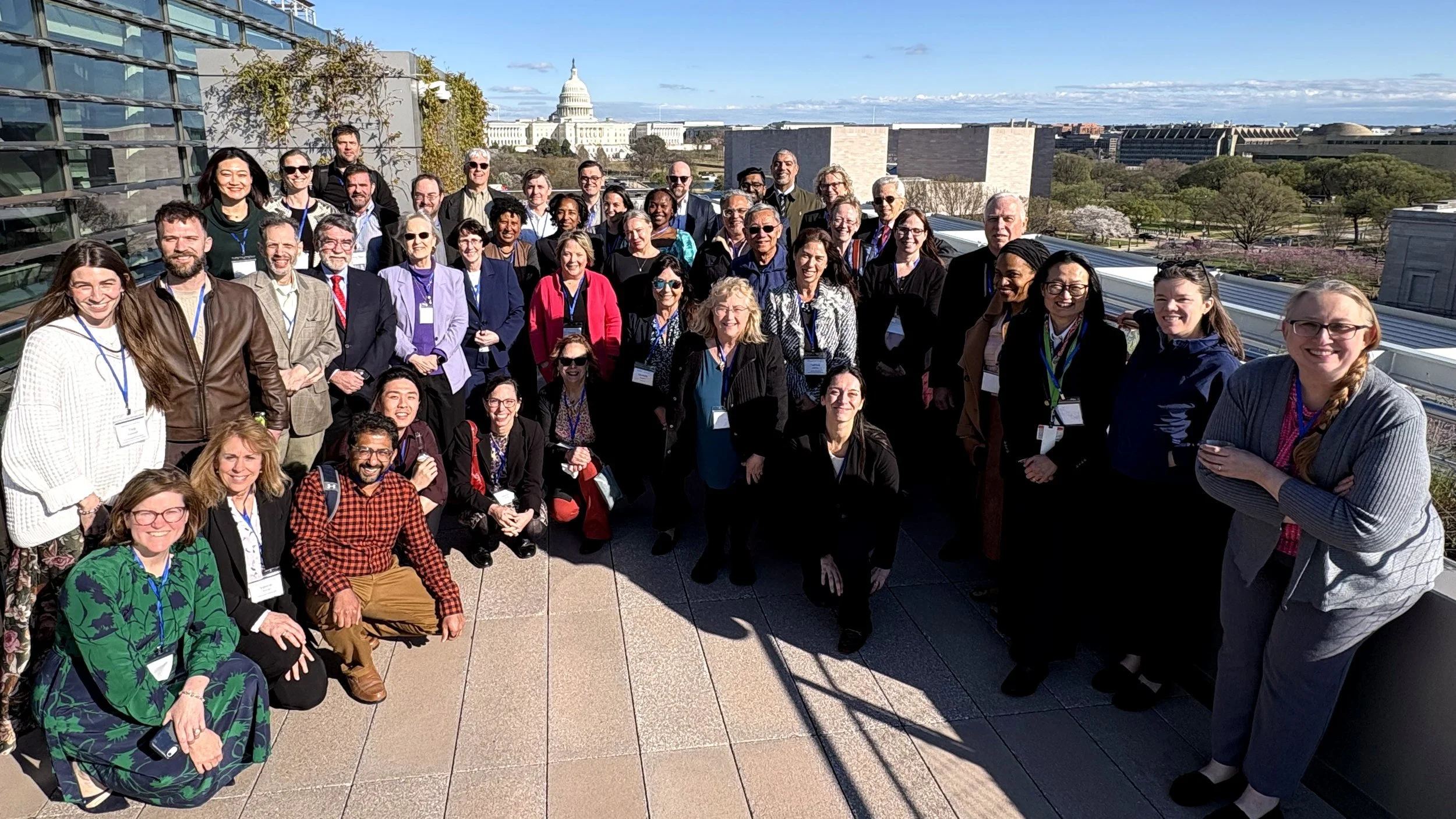
Symposium on the Future of Disease Classification in the United States
Session materials and summaries are available.
2026 Symposium
Available materials:
Symposium co-chairs Christopher Chute and Patrick Romano joined Sue Bowman on AHIMA's HI-Five Policy Podcast in May 2026 to discuss the symposium and what came out of the sessions. Listen on Apple Podcasts, Spotify, or YouTube.
Agenda
March 23, 2026 (Eastern Time)
-
Speaker:
Patrick S. Romano, University of California, Davis, School of Medicine
The presentation is available.
-
The Future of Large-Scale Clinical Data for Real-World Analytics: From fully-specified diagnostic sentences to computable data
Over the past decade, the emergence of large-scale electronic medical records has enabled an unprecedented opportunity for longitudinal analysis of clinical events from real-world data. However, historical mechanisms for encoding such data into classifications impoverishes detailed analytics. New strategies for the systematic capture of clinical concepts, findings, diagnoses, and outcomes promise to address these historical shortcomings, enabling comprehensive clinical characterization that can support high-throughput data science.
Keynote Speaker
Christopher G. Chute, Johns Hopkins University
The presentation is available.
-
Examining what current clinical classifications can and cannot do with discussion of emergent classification and terminology solutions for more complete capture of clinical information.
Speakers:
Susan H. Fenton, McWilliams School of Biomedical Informatics at UTHealth Houston
June Bronnert, Intelligent Medical Objects (IMO)
Sue Bowman, American Health Information Management Association (AHIMA)
Vickie M. Mays, University of California, Los Angeles
The presentation is available.
-
Detailed Rendering of Disease Classification: Opportunities to align and integrate precision-medicine based classifications encoded in biomedical ontologies and real-world data within the framework of the ICD
Speakers:
Melissa Haendel, UNC School of Medicine, Department of Genetics
Ada Hamosh, Johns Hopkins School of Medicine, McKusick-Nathans Department of Genetic Medicine
Peter Fish, Mendelian
Bradford Powell, UNC School of Medicine, Department of Genetics
The presentation is available.
-
The Foundation of the ICD-11: Development, enrichment, maintenance and curation
Chair: Geoffrey M. Reed, Columbia University Vagelos College of Physicians and Surgeons
Speakers:
James T. Case, SNOMED International
Christopher G. Chute, Johns Hopkins University
Michael B. First, Columbia University Vagelos College of Physicians and Surgeons
-
Overviewing the opportunities, methodologies, and feasibility, of AI assisted coding of clinical records into post-coordinated expressions with classifications enriched with clinical terminology detail.
Moderator: Christopher G. Chute, Johns Hopkins University
Speakers:
Ahmed Hassoon, Johns Hopkins University
Paul Nagy, Johns Hopkins School of Medicine
Zheyu Wang, Johns Hopkins University
Tanner Zhang, Johns Hopkins University
The presentations are available:
-
Speakers:
Patrick S. Romano, University of California, Davis, School of Medicine
The presentation is available.
March 24, 2026 (Eastern Time)
-
Speaker:
Christopher G. Chute, Johns Hopkins University
-
This panel session discussed the opportunities, challenges, and issues to be considered in order for U.S. policymakers to decide whether a national linearization of ICD-11 should be developed.
Moderator: Sue Bowman, American Health Information Management Association (AHIMA)
Panelists:
June Bronnert, Intelligent Medical Objects (IMO)
Denene Harper, American Hospital Association (AHA)
-
In this session, provider organizations and EHR vendors will discuss the needs of future classification systems and the opportunities and challenges to the potential transition to ICD-11, such as transition costs, education and training requirements, technology advancements, and its ability to better serve patients, clinicians, and population health.
Moderator: Valerie Watzlaf, University of Pittsburgh
Panelists:
Michelle Badore, Solventum
Amol Bhalla, Intelligent Medical Objects (IMO)
Veena Dawar, Oracle Health
David Hoyt, Epic
Jackie King, ArchPro Coding and Consulting
Tammy Love, American Hospital Association (AHA)
The presentation is available.
-
From reactors to roadmap.
Speakers:
Patrick S. Romano, University of California, Davis, School of Medicine
Charles Hobson, HCA Florida Lake City Hospital
Geoffrey M. Reed, Columbia University Vagelos College of Physicians and Surgeons
Patricia Saleeby, Bradley University
The presentation is available.
-
Speakers:
Sue Bowman, AHIMA
Valerie Watzlaf, University of Pittsburgh
2026 Symposium Planning Committee
Prof. Chris G. Chute, Co-Chair -Johns Hopkins University
Prof. Patrick S. Romano, Co-Chair - University of California, Davis
Sue Bowman - American Health Information Management Association (AHIMA)
Dr. Bruce Cuthbert - formerly Research Domain Criteria (RDoC), National Institute of Mental Health (NIMH)
Charles W. Foldyna-Hawley - National Association of Health Data Organizations (NAHDO)
Denise Love - formerly NAHDO
Prof. Vickie M. Mays - UCLA Departments of Psychology and Health Policy & Management
Prof. Geoffrey M. Reed - Columbia University Vagelos College of Physicians and Surgeons
Prof. Valerie J.M. Watzlaf - University of Pittsburgh